
Method 10
Concrete slab demolition in Abu Dhabi, Dubai & Al Ain
Controlled demolition of ground and suspended concrete slabs. Cut into sections, broken out or lifted out and removed, with noise, dust and vibration kept under control.
Planned bay by bay
Cut lines keep damage inside the bay
Debris cleared through an agreed route
Ready for replacement concrete
Method and sequence confirmed at site survey
What it is
When to specify slab demolition
Slab demolition is the planned removal of ground and suspended concrete slabs, from a single damaged bay to a full floor plate. The slab is scanned and marked first, then cut into sections so it can be lifted out or broken out without damaging the beams, walls and services around it.
The most common uses are removing damaged or contaminated slab bays for replacement, opening up floors for new stairs, lifts and risers, and clearing whole slabs ahead of refurbishment or redevelopment. On industrial and commercial jobs across the UAE it is also the way a bay is taken out cleanly so new concrete can be poured to a square edge.
The trade-off is planning. Slab demolition needs a survey, scanning for post-tension cables and services, propping below suspended slabs where required, and a clear route for removing debris. Where the slab is thick or heavily reinforced, we will confirm the method and sequence with you at survey.
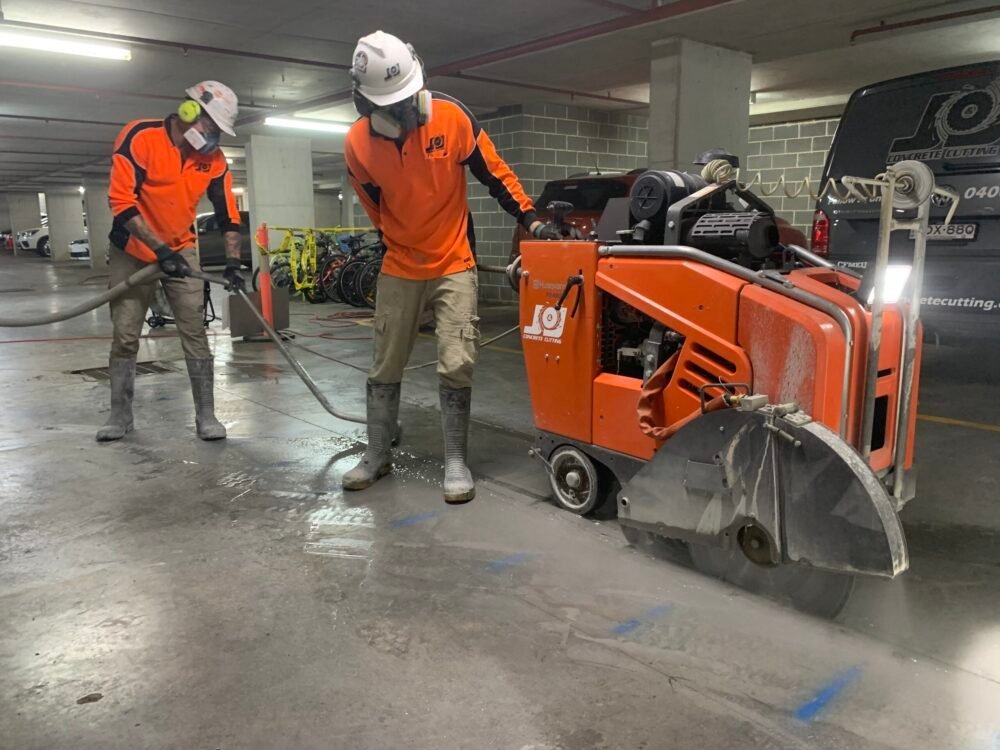
Slab demolition
Applications
What we use it for
Damaged slab bays
Cracked, damaged or contaminated slab sections removed in full thickness, ready for new concrete.
Suspended floor removal
Upper floor slabs cut into sections and removed with propping below, for refurbishment or structural change.
Floor openings and voids
Slab sections removed for new stair, lift and riser openings, with the perimeter cut first so edges stay clean.
Ground slab removal
Slabs on grade broken out for new services, foundations, level changes or site redevelopment.
Car park and basement slabs
Car park decks, ramps and basement floor slabs removed in controlled sections for repair or alteration.
Full floor plate removal
Whole slabs pre-cut into liftable sections so demolition proceeds by removal rather than by uncontrolled breaking.
Sequence
How the job runs
Survey and mark out
Demolition area marked from the drawing and agreed on site, with propping, access and the removal route planned.
Scan the slab
GPR run over the slab to locate reinforcement, post-tension cables and buried services before any cutting starts.
Cut into sections
Slab cut into manageable sections with water fed to the blade throughout, keeping dust and vibration down.
Remove and clear
Sections lifted or broken out, slurry vacuumed and bunded, edges dressed and waste removed from site.
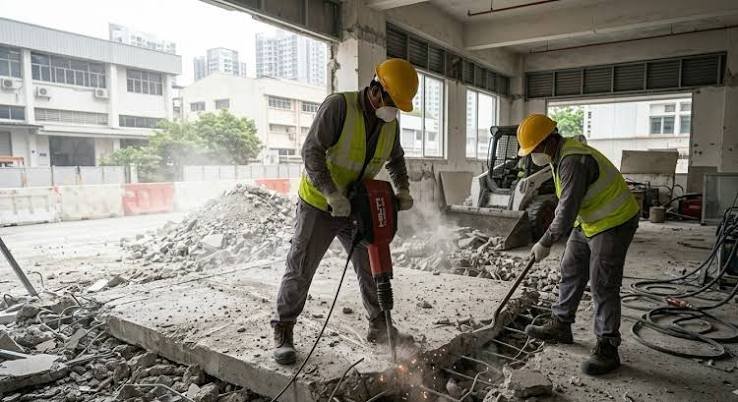
Site control
Post-tensioned slabs and why scanning comes first
A large proportion of suspended slabs in Dubai and Abu Dhabi towers are post-tensioned. Cutting a post-tension cable releases stored energy instantly and can cause serious injury as well as structural damage that is expensive and slow to remediate.
There is no visual way to tell a post-tensioned slab from a conventionally reinforced one once it is finished. We scan every suspended slab before demolition, mark the cable runs on the surface, and set the cut lines to clear them. Where the required cut cannot avoid a cable, we stop and refer it back to the structural engineer.
On ground slabs the risk is different but still real: buried drainage, electrical ducts and chilled water lines all sit under floors and rarely match the as-built drawing.
Related
Often quoted together

Concrete Slab Demolition
Suspended and ground slabs cut into sections and lifted out. Propped & craned →

Concrete Scanning
GPR survey and marked-up plan before any blade goes in. To 600 mm →

Concrete Slab Core Cutting
Downward coring through suspended and ground floor slabs. Ø25–600 mm →
Questions
Slab demolition questions
There is no fixed limit. Most slabs are cut in a single pass with a floor saw, and thicker slabs are cut from both faces where accessible, or with wire sawing where a blade cannot reach through in one pass. The slab is then removed in sections the site can handle.
Yes, but only after scanning. Post-tension cables carry stored energy and cutting one is dangerous as well as structurally damaging. We run GPR over the full cut line, mark cable positions on the surface, and set the cut to clear them. If the required line cannot avoid a cable, we stop and refer it back to the structural engineer rather than proceed.
Yes. We use electric and hydraulic machines indoors and below ground because petrol saws produce exhaust fumes that are unacceptable in enclosed spaces. Water is fed to the blade and slurry is vacuumed and bunded so it does not reach drainage gullies or lower levels.
The cut is bunded and a wet vacuum runs alongside the saw collecting slurry as it is produced. On finished floors we also sheet and protect the surrounding area. Slurry is collected into containers and removed from site rather than washed into the nearest gully, and disposal is included in the quoted figure.
Often yes where vibration, noise or propping limits apply, because cutting the slab into sections avoids damage to the retained structure and the repairs that follow. On open ground slabs with no restrictions, direct break-out can be quicker, and we quote the method that suits the job.
Send the drawings, get a fixed price
Mark the slab areas to be demolished on a PDF or DWG and we come back within four working hours with a fixed quote, or a time for a free site survey.